Background and Conceptual Foundations
The European Political Community (EPC) builds on earlier attempts to create a pan-European political platform beyond formal institutional frameworks. One of the earliest such initiatives was proposed by François Mitterrand in 1989 in the form of a “European Confederation,” intended to bring together Western and Eastern European states after the Cold War. The proposal aimed to establish a space for political dialogue and coordination outside the structures of the European Communities, but failed due to geopolitical mistrust, competing institutional trajectories—particularly EU and NATO enlargement—and the absence of a clearly defined operational mandate.
In the decades that followed, European integration remained centered on enlargement and institutional deepening. However, the gradual erosion of the European security architecture, the weakening of multilateral institutions, and increasing geopolitical fragmentation revived the need for more flexible political coordination formats. These structural dynamics created the conditions for the emergence of the EPC.
Creation in 2022 as a Geopolitical Response
The EPC was initiated in May 2022 by Emmanuel Macron in response to Russia’s full-scale invasion of Ukraine. The war exposed the limitations of existing frameworks: EU enlargement proved too slow to respond to urgent geopolitical challenges; NATO remained a military alliance with membership boundaries; and broader multilateral institutions lacked the flexibility required for rapid political coordination.
The EPC was conceived as an inclusive, leader-level platform bringing together European states regardless of EU membership, enabling swift dialogue on security, energy, and geopolitical issues without the constraints of formal institutionalization.
Development through Summits (2022–2025)
The eighth summit will take place in Yerevan on 4 May 2026, underscoring the growing importance of the South Caucasus and Armenia’s increasing engagement in European political processes.
Structure and Functioning
The EPC is deliberately non-institutionalized. It has no founding treaty, permanent secretariat, or binding decision-making mechanisms. This “light architecture” enables flexibility, rapid coordination, and broad political accessibility.
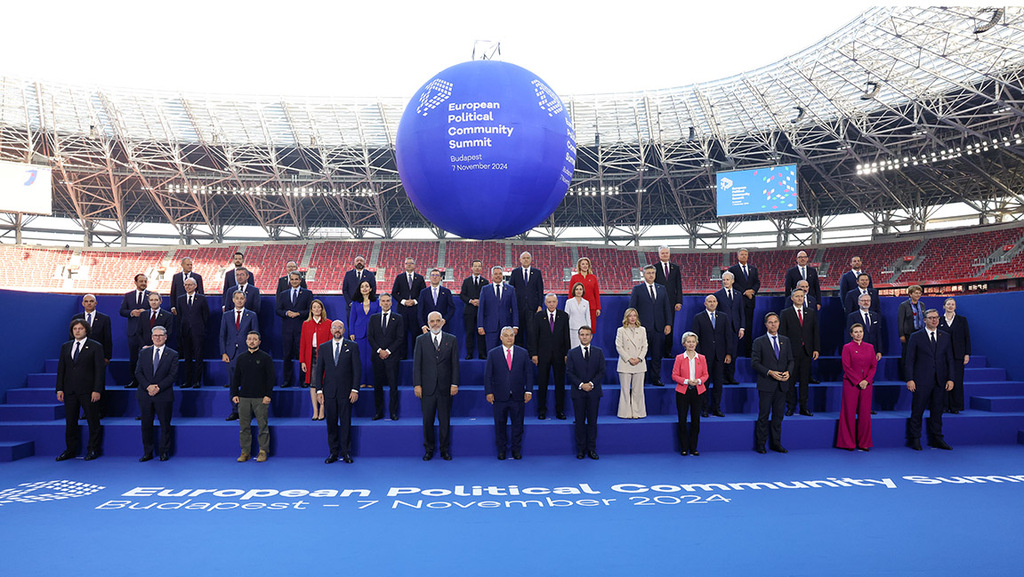
Participation includes EU member states, candidate and partner countries, the Western Balkans, and non-EU European states such as the United Kingdom, Norway, and Switzerland. Bringing together approximately 50 leaders, the EPC constitutes the broadest political gathering in Europe.
Strategic Significance
The EPC’s significance lies primarily in its political function. It facilitates direct leader-level engagement across institutional divides, enabling faster coordination than formal organizations, while serving as a mechanism for strategic signaling and projecting European cohesion.
At the same time, it acts as a bridge between EU and non-EU states, maintaining political alignment without substituting for enlargement. For smaller states such as Armenia, it provides a platform to internationalize security concerns and pursue diversified engagement strategies.
The Prague 2022 Summit: Implications for Armenia
The Prague summit had significant political and security implications for Armenia. It took place in the context of Azerbaijan’s sustained military pressure against Armenia, including the large-scale offensive on Armenia’s sovereign territory in September 2022, just three weeks prior to the meeting. Against this backdrop, under EU and French mediation, Armenia and Azerbaijan reaffirmed the principle of mutual recognition of territorial integrity, referencing the 1991 Alma-Ata Declaration. This was widely interpreted as recognition of Azerbaijan’s territorial integrity, including Nagorno-Karabakh.
At the same time, the summit led to the deployment of an EU civilian monitoring mission, later institutionalized as the European Union Mission in Armenia (EUMA). This marked a qualitative shift in EU engagement and acquired particular significance as a form of soft deterrence, contributing to reducing the risk of further Azerbaijani military offensives against Armenia, strengthening its border stability and human security.
The Prague formulation was subsequently instrumentalized by various actors. In Armenia, opposition forces, alongside Russian narratives, presented it as Armenia’s handover of Nagorno-Karabakh to Azerbaijan. However, the principle of territorial integrity had long underpinned the negotiation framework and had been publicly articulated earlier, including by Russian President Vladimir Putin in December 2020, when he described Nagorno-Karabakh as internationally recognized territory of Azerbaijan. Extracting Prague formulation from its broader political and negotiating context and portraying it as a unilateral concession constitutes a form of narrative manipulation serving both domestic and external political purposes.
The Granada 2023 Meeting: Azerbaijan’s Contestation of EU Mediation
Developments surrounding the Granada meeting in October 2023 highlighted Azerbaijan’s contestation of the EU’s mediating role in the Armenia–Azerbaijan process. Azerbaijan refused to attend it, following its takeover of Nagorno-Karabakh and the displacement of the Armenian population, citing France’s planned defense support for Armenia. In parallel, EU High Representative Josep Borrell’s critical statement following the military takeover of Nagorno-Karabakh was actively used by Azerbaijan to frame the EU as having a pro-Armenian bias.
At the Grenada meeting, the EU and France reaffirmed their support for Armenia’s sovereignty and security during the meeting. Since then, Azerbaijan has effectively rejected the EU’s mediation role in the Armenia–Azerbaijan peace process.
Agenda of the Yerevan Summit: Emerging Priorities and External Outreach
The Yerevan summit reflects a shift toward a more structured and thematic EPC agenda. Discussions are expected to focus on democratic resilience, responses to hybrid threats, connectivity across transport, energy, and digital domains, and broader economic and energy security. These priorities align with wider European efforts to strengthen systemic resilience while advancing cross-regional integration, particularly along emerging connectivity corridors linking Europe with other regions.
The summit is framed within a broader narrative emphasizing unity and stability in Europe, suggesting that the EPC is increasingly functioning not only as a coordination mechanism but also as a platform for shaping strategic visions of the European political order.
A notable development is the participation, for the first time, of a non-European country. Canadian Prime Minister Mark Carney is expected to attend the meeting, signaling a potential opening of the EPC beyond its originally European scope and reflecting efforts to engage like-minded transatlantic partners.
This development suggests that the EPC may evolve from a purely European coordination platform into a more flexible geopolitical forum capable of incorporating external partners where strategic alignment exists.
Limitations and Structural Constraints
The EPC’s limitations stem from its design. As a non-institutional platform, it lacks binding decision-making mechanisms and cannot ensure implementation of political agreements. While this enables flexibility, it constrains its ability to produce concrete outcomes.
Its broad agenda risks diluting focus, and without a permanent structure, effectiveness depends on sustained political will. The EPC also may at times overlap with existing institutions such as the EU, NATO, the OSCE, and the Council of Europe, raising questions of redundancy. However, its value lies precisely in its ability to operate where these institutions face political or procedural constraints.
Strategic Significance of the Yerevan Summit for Armenia
Hosting the EPC summit carries significant political and strategic implications for Armenia. It reflects the country’s growing engagement in European political processes and strengthens its position within a broader European political and security dialogue. It also reflects the high level of Armenia–EU relations and demonstrates trust in Armenia as a safe and reliable host, even in the context of ongoing conflict in neighboring Iran. The meeting enhances Armenia’s international visibility and contributes to strengthening Armenia’s actorness as a small state within an increasingly complex and fragmented international environment.
The meeting will be followed by an Armenia–EU bilateral summit, which provides an opportunity to present Armenia’s concerns and perspectives directly to European leaders—particularly relevant in the context of efforts to diversify foreign and security partnerships and advance connectivity.
It also underscores the growing importance of the South Caucasus in the European political agenda and creates opportunities to deepen engagement with European actors in areas such as security, connectivity, and economic cooperation.
The EPC’s inclusivity, visibility, and convening power make it an increasingly relevant instrument for shaping European political dialogue, strategic narratives, and patterns of alignment in a fragmented international order.